China Top Aluminum CNC Machining Parts Manufacturer? The answer requires more than a low quotation or polished website. It requires verified capability, stable quality, and evidence from real production.
The International Aluminium Institute reported global primary aluminum production above 70 million tonnes in 2023. That scale supports broad material availability, but it does not guarantee machining quality. A supplier must still control alloy traceability, tool wear, burr formation, dimensional variation, and surface protection. The global CNC machine market was valued at approximately USD 88 billion in 2023, according to Grand View Research. Its growth reflects stronger demand for automated, repeatable manufacturing across aerospace, electronics, medical, and automotive applications.
Toyota production expert Taiichi Ohno said, “Without standards, there can be no kaizen.” This principle remains highly relevant to Aluminum Cnc Machining Parts. A capable Chinese manufacturer should show documented inspection procedures, calibrated equipment, process records, and clear tolerance commitments. Look for five-axis machining where geometry demands it. Ask for material certificates, first-article inspection reports, and sample parts with measurable results.
Small details matter.
A 0.02-millimeter mismatch can affect assembly. Scratches can weaken customer confidence. Inconsistent anodizing can expose weak process control.
Yet no factory wins every project. Even a strong supplier may struggle with unusual alloys, thin walls, or unstable drawings. That is worth admitting. The better question is whether the manufacturer identifies risks early, communicates clearly, and improves after mistakes. In this guide, we examine the practical evidence behind China’s leading Aluminum Cnc Machining Parts manufacturers, not merely their marketing claims.
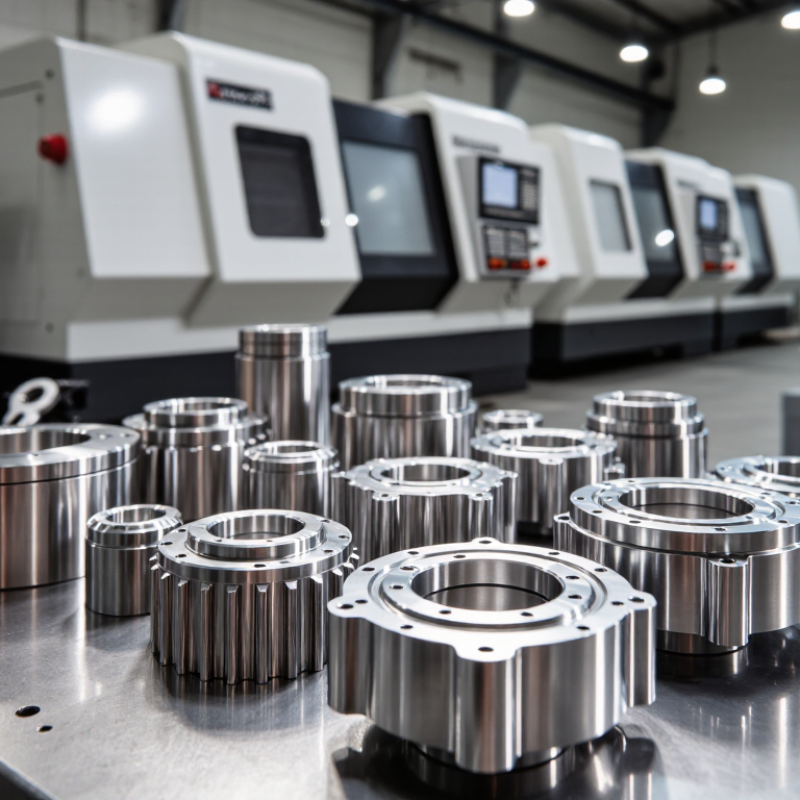
An aluminum CNC machining parts manufacturer turns digital engineering files into accurate metal components. The work usually begins with CAD review, material selection, and toolpath planning. Machines then mill, turn, drill, or thread aluminum billets with computer-controlled movement.
The International Aluminium Institute reported about 70.6 million tonnes of global primary aluminum production in 2023. This scale supports broad industrial use, but volume alone does not ensure precision. A reliable manufacturer checks alloy condition, cutting parameters, surface finish, and dimensional tolerances. Coordinate measuring machines can verify critical features, while process records improve traceability. The Grand View Research CNC machine market report estimated the sector at USD 86.83 billion in 2022, with projected growth through 2030. That expansion reflects rising demand for repeatable, digitally controlled production.
In practical projects, manufacturers may produce lightweight brackets, housings, heat sinks, and robotic components. Each part can require different choices. Thin walls may vibrate. Deep pockets may trap chips. Sharp internal corners can increase machining time. These details are easy to underestimate. The process is not flawless. Tool wear, thermal expansion, and drawing errors can still affect results. Experienced teams reduce these risks through prototype checks, first-article inspection, and clear communication about tolerances. A dependable supplier should explain what can be held consistently, not promise impossible accuracy.
| Data Dimension | Typical Information | Why It Matters in CNC Machining |
|---|---|---|
| Definition | A manufacturer that uses computer-controlled machine tools to produce aluminum components from digital design files. | The process supports repeatable production of complex parts with controlled dimensions and consistent quality. |
| Common Aluminum Alloys | 6061-T6, 6082-T6, 7075-T6, 2024-T3, and 5052-H32 are frequently used engineering alloys. | Alloy selection affects strength, corrosion resistance, machinability, weight, and finishing performance. |
| Material Density | Most aluminum alloys have a density of approximately 2.6–2.8 g/cm³. | Aluminum parts are substantially lighter than steel parts of similar volume, which benefits weight-sensitive designs. |
| Machinability | Aluminum is generally easy to cut, but soft alloys can produce built-up edges and long chips. | Suitable tooling, chip evacuation, cutting speed, feed rate, and coolant selection help maintain surface quality. |
| Typical CNC Processes | 3-axis, 4-axis, and 5-axis milling; CNC turning; drilling; tapping; boring; and contour machining. | The process is selected according to part geometry, required access angles, production volume, and tolerance needs. |
| Typical Dimensional Tolerance | Many general CNC parts are produced around ±0.05 mm to ±0.10 mm; tighter tolerances require special process control. | Actual tolerance depends on alloy, feature size, machine capability, thermal conditions, tooling, and inspection method. |
| Surface Roughness | A machined aluminum surface may commonly achieve approximately Ra 1.6–3.2 μm, depending on tooling and cutting conditions. | Surface requirements influence tool selection, machining parameters, inspection, and possible secondary finishing. |
| Available Surface Finishes | As-machined, bead blasted, brushed, anodized, powder coated, chemical conversion coated, or polished. | Finishing can improve corrosion resistance, appearance, wear performance, electrical properties, or coating adhesion. |
| Prototype Capability | CNC machining is suitable for one-off prototypes and low-volume functional samples without dedicated hard tooling. | Designs can be tested and revised quickly before investing in higher-volume production methods. |
| Production Range | Commonly used for prototypes, small batches, medium-volume production, and selected high-volume applications. | Production planning should consider cycle time, machine capacity, fixture design, inspection frequency, and batch size. |
| Quality Documentation | Possible documents include material certificates, dimensional inspection reports, surface-finish records, and certificates of conformity. | Documentation provides traceability and confirms whether parts meet drawing and purchase-order requirements. |
| Inspection Equipment | Calipers, micrometers, height gauges, pin gauges, thread gauges, optical instruments, and coordinate-measuring machines. | Different instruments are required for external dimensions, internal features, geometric tolerances, and complex profiles. |
| Typical Applications | Enclosures, brackets, heat sinks, manifolds, fixtures, structural components, camera parts, robotics components, and transportation parts. | Aluminum combines low weight, corrosion resistance, thermal conductivity, and practical machinability for many industries. |
| Design Considerations | Use uniform wall thickness where possible, avoid unnecessarily deep narrow pockets, add suitable internal radii, and specify only necessary tolerances. | Design for manufacturability can reduce machining time, tool wear, distortion, scrap, and total production cost. |
| Supplier Evaluation Factors | Material control, machine capability, engineering support, inspection systems, finishing resources, lead time, packaging, and communication. | A balanced evaluation is more reliable than judging a manufacturer only by quoted price or advertised capacity. |
| Key RFQ Information | Provide 3D CAD files, 2D drawings, alloy and temper, quantity, tolerance requirements, surface finish, inspection needs, and delivery location. | Complete technical information enables accurate costing, process planning, lead-time estimation, and quality verification. |
Note: Values shown are typical engineering ranges. Final specifications should be confirmed against the approved drawing, material standard, process capability, and inspection plan.
It converts CAD files into metal components using computer-controlled milling, turning, drilling, or threading.
Engineers compare strength, weight, corrosion resistance, and machining behavior.
Thin walls may vibrate during cutting.
Clear datums and realistic tolerances guide the machining process.
Inspect the first completed part carefully.
Request recent inspection records, material certificates, and photos of actual aluminum parts.
Provide a detailed drawing, 3D file, target quantity, material requirements, and intended application.
A sample reveals problems with fit, dimensions, surface finish, and machining stability.
An Aluminum Cnc Machining Parts manufacturer specializes in converting digital designs into precise components made from various aluminum alloys. Using CNC milling, turning, drilling, and finishing processes, the manufacturer can produce prototypes, small batches, and large-volume parts for applications that require low weight, corrosion resistance, and reliable dimensional accuracy. A capable supplier should support design review, material selection, tooling, surface treatment, and production planning from start to finish.
Choosing a China-based manufacturer can provide competitive pricing, flexible production capacity, and access to experienced machining resources. However, cost should not be the only consideration. Buyers should evaluate equipment capability, engineering expertise, inspection systems, material traceability, process controls, and compliance with recognized quality standards. Before selecting a partner, review sample parts, confirm tolerances and lead times, clarify communication procedures, and verify quality documentation. The right manufacturer should offer consistent workmanship, transparent communication, dependable delivery, and practical technical support.

 HG Precision